Philosophy of Education & Legal Studies

David J. Blacker

Professor at the University of Delaware. Author of six books on applied and speculative topics in philosophy and education including, most recently, what psychedelics can teach us.

Finalist, Foreword INDIES Book of the Year General Editor, SUNY Horizons series 100+ publications & presentations
Black-and-white portrait of David J. Blacker
Latest

New work

Current project · in progress

Ambivalences of Vastness

Straining Beyond the Mesoscopic Scale

We are mesoscopic creatures. We live our lives within a middle range of objects, distances, durations, and causes to which our perceptual and cognitive capacities seem reasonably well adapted. And yet, oddly, we are also creatures who strain against this given scale. We peer outward into cosmic space, backward into deep time, downward into the quantum, and sideways into immensities of complexity and possibility that we can represent but never quite grasp. Sometimes these glimpses console us: our everyday troubles shrink against the Big Picture. Sometimes the same diminishment terrifies. Is this cosmic horror or cosmic consolation?

I take this ambivalence as an ontological clue to a deeper predicament. Human beings are frame-bound creatures who nevertheless possess a remarkable capacity for frame breaking—for glimpsing beyond the conditions of ordinary intelligibility without ever quite escaping them. Through science, education, and culture we assimilate such astonishments into everydayness, only periodically to rediscover their strangeness. Why this restless movement between assimilation and de-assimilation? Why not simply remain comfortably within our scale? And what might this peculiar drive toward the borders of intelligibility reveal about us?
Planck length10⁻³⁵ mProton10⁻¹⁵ mAtom10⁻¹⁰ mYou10⁰ mEarth10⁷ mObservable universe10²⁶ m the mesoscopic
New article · Journal of Moral Education, 2026

The Pedagogical Hard Problem of Generative AI: Socratic Countermeasures

Generative AI has created a “pedagogical hard problem,” forcing educators to verify genuine student experiences over final products.

Read the summary

Blacker states that generative AI has created a ‘pedagogical hard problem,’ forcing educators to verify genuine student experiences over final products. Referencing Henri Bergson, he argues that traditional text-based tasks no longer pass a ‘reverse Turing test’ (RTT), which involves the proving of human authorship. Blacker addresses this situation by offering an illustration of an RTT-passing performative, embodied learning activity, a student-designed AI in the form of a Socrates chatbot that can catalyze gradable philosophical performances resistant to AI outsourcing. Inspired by Socratic dialogue, this approach emphasizes experiential elements such as aporia, elenchus, parrhesia, and eunoia, which are best learned firsthand. Despite concerns about scalability and writing skills, Blacker believes that this approach can help sustain humanistic education amid the growth of AI.

New essay · PSYCHE, 2025

Psychedelics can be philosophical tools for demolishing assumptions

An essay for a general audience on psychedelic experience as a kind of philosophical practice.

New podcast interview · July 31, 2026

“On Psychedelics and Learning”

On Thinking in the Midst with Cara Furman. Sponsored in part by Hunter College (CUNY) and the Philosophy of Education Society.

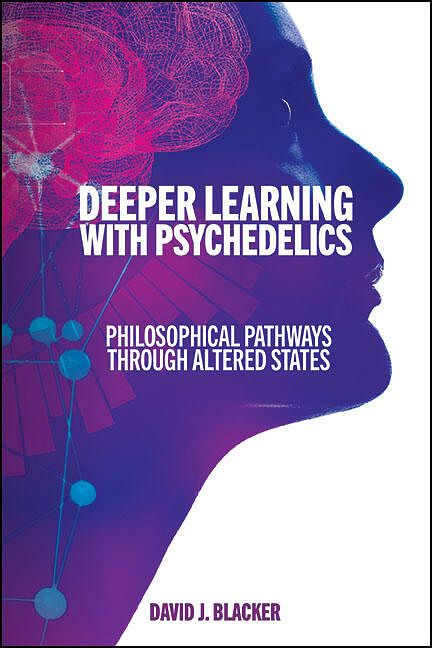
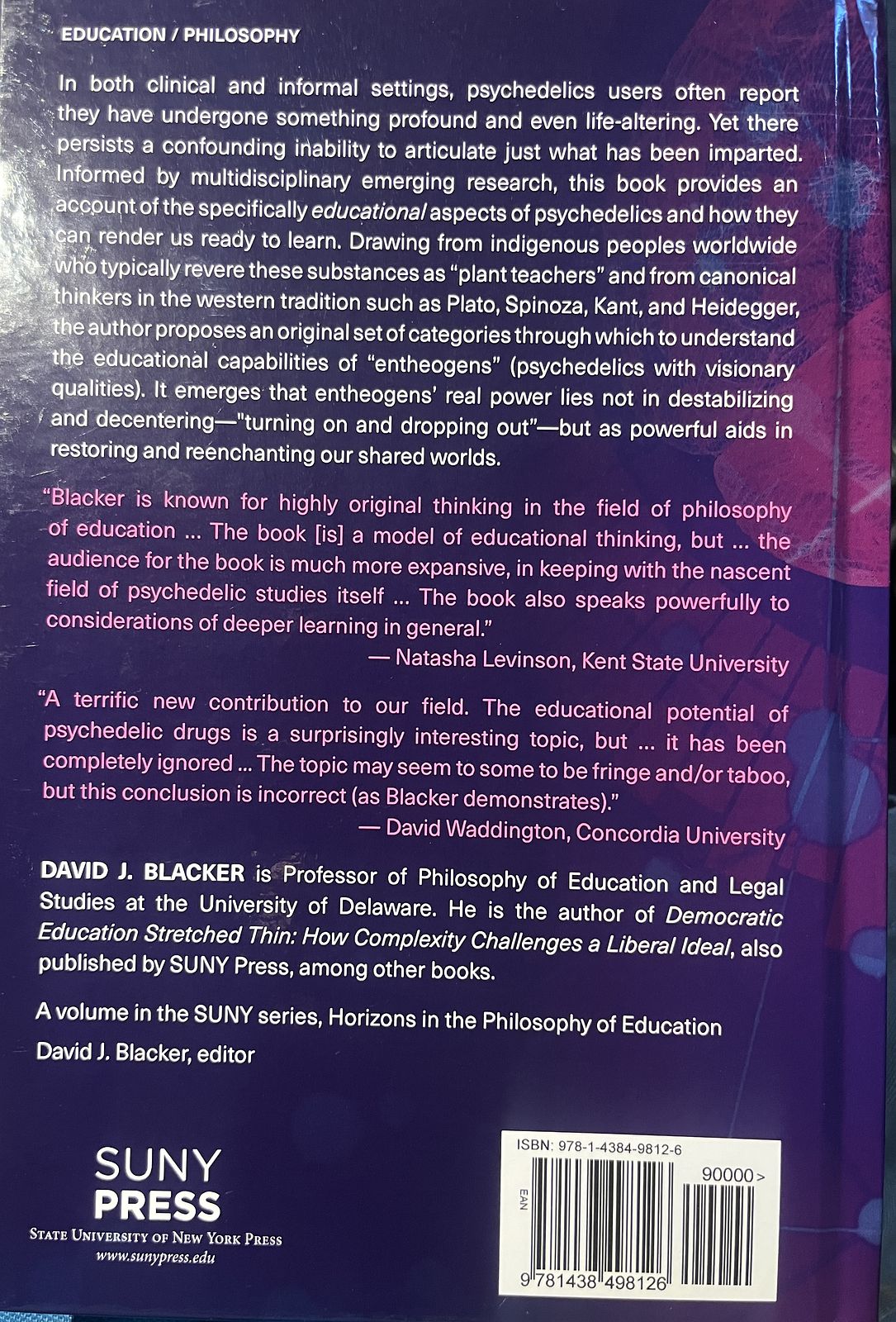
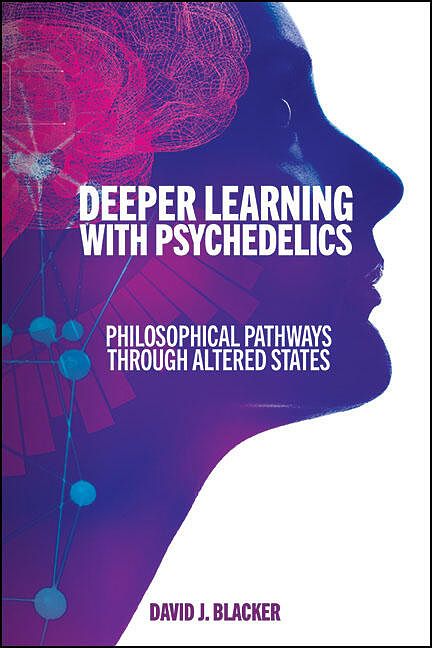
Back cover of Deeper Learning with Psychedelics Cover of Deeper Learning with Psychedelics: Philosophical Pathways Through Altered States
New book · SUNY Press, 2024

Deeper Learning with Psychedelics

Philosophical Pathways Through Altered States

★ Finalist, Foreword INDIES Book of the Year

In both clinical and informal settings, psychedelics users often report they have undergone something profound and even life-altering. This implies a claim that they have learned something important. Yet there also persists a notorious inability precisely to articulate just what has been imparted. This situation of ineffable profundity is so widespread as to have become conventional wisdom among psychedelics enthusiasts and a source of frustration and/or amusement depending on one’s context and temperament. Unfortunately, the announced insights typically reduce to platitudes like “we are all connected” or “it’s all about love,” etc.—beautiful sentiments but unclear as to what role the psychedelics have actually played and what exactly such generalities, however heartfelt, ultimately mean.

Continue reading the abstract

Informed by multidisciplinary emerging research, this book provides an account of the specifically educational aspects of psychedelics and how like the best teachers they can render us ready to learn. Drawing from indigenous peoples worldwide, who typically revere these substances as “plant teachers,” and also from canonical thinkers in the western tradition such as Plato, Descartes, Hume and Heidegger, Blacker proposes an original set of categories through which to understand the educational capabilities of classic psychedelics. While there is no neat blueprint, it turns out that beneath the kaleidoscope of distorted perceptions, there are discernible patterns that point in very surprising directions. It emerges that psychedelics’ real power lies not in destabilizing and decentering—“turning on and dropping out”—but as powerful aids in restoring and reenchanting our shared worlds.

“Blacker is known for highly original thinking in the field of philosophy of education … The book also speaks powerfully to considerations of deeper learning in general.”— Natasha Levinson, Kent State University
“A terrific new contribution to our field … The topic may seem to some to be fringe and/or taboo, but this conclusion is incorrect (as Blacker demonstrates).”— David Waddington, Concordia University
Zero Books · 2013

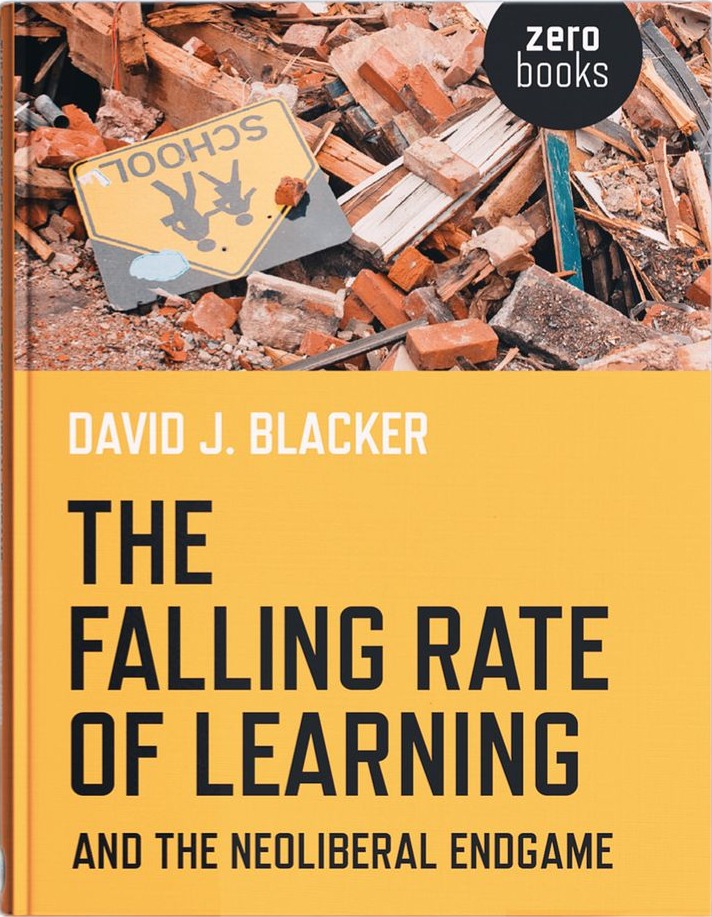
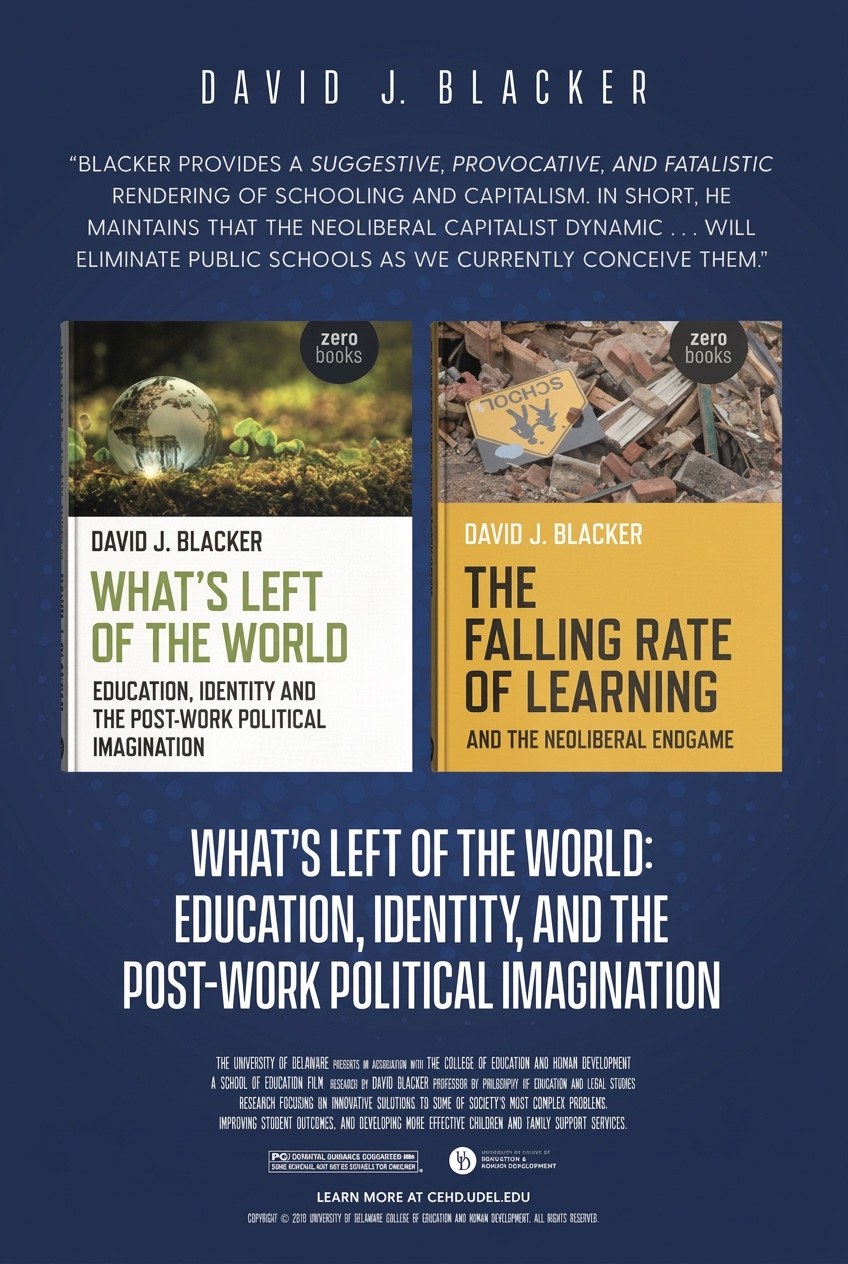
The Falling Rate of Learning and the Neoliberal Endgame

Subject of a special issue of Educational Theory #1 Amazon “Hot New Release”

A book that reads the fate of education in late capitalism through the lens of the falling rate of profit. It traces how schools, universities and student debt are being reshaped as neoliberalism nears its limits, and what may be left for education afterward. It was the subject of a special symposium issue of Educational Theory, the leading US philosophy of education journal, and reached #1 on Amazon’s “Hot New Release” lists in education policy, education philosophy and democracy.

“Blacker is a sharp and forceful writer, giving his analysis something of the vividness and urgency of an Old Testament prophet delivering warnings that nobody really wants to hear.”— Inside Higher Ed
“One of the most readable and radical of recent books on the ‘crisis of education.’”— Radical Philosophy
“A brilliant, searing broadside.”— South China Morning Post
“A rousing call to arms.”— Times Higher Education
“Compelling and tightly argued.”— Educational Theory
Cover of The Falling Rate of Learning and the Neoliberal Endgame
Books

Six books, three decades

Cover of Deeper Learning with Psychedelics
SUNY Press · 2024

Deeper Learning with Psychedelics

Philosophical Pathways Through Altered States. Finalist, 2024 Foreword INDIES Book of the Year.

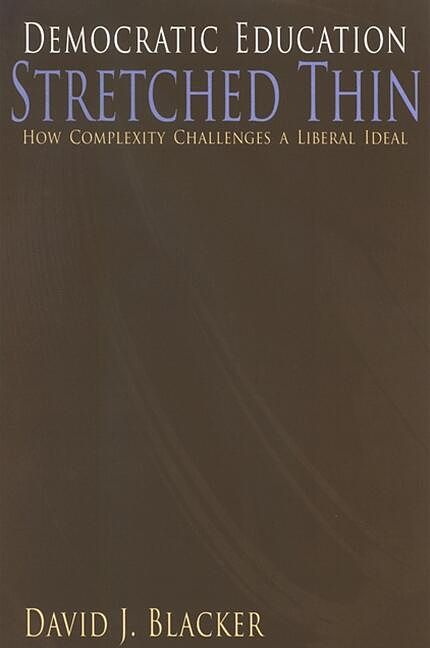
Cover of Democratic Education Stretched Thin
SUNY Press · 2007

Democratic Education Stretched Thin

How Complexity Challenges a Liberal Ideal. Listed by Library Journal as a Top 20 “Bestseller in Education.”

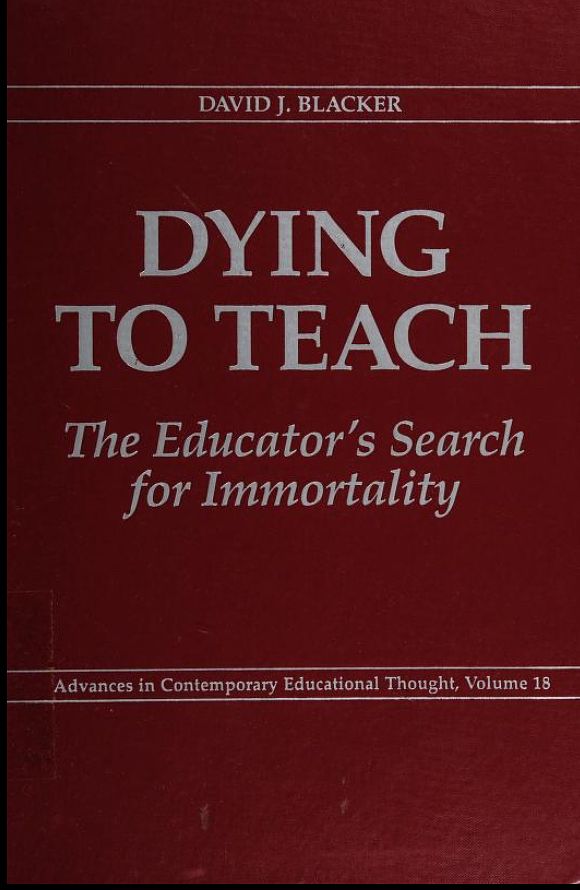
Cover of Dying to Teach
Teachers College Press · 1997

Dying to Teach

The Educator’s Search for Immortality. Selected by the Philosophy of Education Society as “one of the most significant current works in the philosophy of education.”

Also · 2010–2013

Ethics for Educators Series

State-specific law and ethics texts, co-written with colleagues:

  • Illinois Educators (2010)
  • Arkansas Educators (2010)
  • Michigan Educators (2010)
  • Texas Code of Ethics (2010; 2nd ed. 2011)
  • California Educators (2012)
  • North Carolina Code of Ethics (2013)

Blacker is also General Editor of the SUNY series Horizons in the Philosophy of Education.

Writing

Selected articles & chapters

Journal articles

  1. “The Pedagogical Hard Problem of Generative AI: Socratic Countermeasures”Journal of Moral Education · 2026
  2. “Post-Productivist Education and the Challenge of Extreme Identities”Knowledge Cultures · 2018
  3. “An Optimistic Response”Invited symposium on “Neo-Marxism and Schooling,” featuring The Falling Rate of Learning · 2015
  4. “The Illegitimacy of Student Debt”Works and Days, special issue on “Education for Revolution” · 2013
  5. “An Unreasonable Argument Against Student Free Speech”Educational Theory · 2009
  6. “More than Test Scores: A Liberal Contextualist Picture of Educational Accountability”Educational Theory · 2003
  7. “Proceduralism and the Orthodox Backlash Against Students’ Rights”American Journal of Education · 2001
  8. “The Institutional Autonomy of Education”Journal of Philosophy of Education · 2000
  9. “Complex Equality and Democratic Education: The Challenge of Walzer’s Spherical Pluralism”Educational Theory · 1999
  10. “Fanaticism and Schooling in the Democratic State”American Journal of Education · 1998
  11. “On the Alleged Neutrality of Technology: A Study in Dewey’s Experience and Nature”Journal of Speculative Philosophy · 1994

Book chapters

  1. “Compulsory Education Cycles Down”In Papastephanou, ed., Philosophical Perspectives on Compulsory Education · Springer, 2014
  2. “Civic Friendship and Democratic Education”In Feinberg & McDonough, eds., Education and Citizenship in Liberal-Democratic Societies · Oxford University Press, 2003
  3. “Information and Communication Technology” (with Jane McKie)In Blake, Smeyers & Smith, eds., Blackwell Guide to the Philosophy of Education · Blackwell, 2003
  4. “Intellectuals at Work and in Power: Toward a Foucauldian Research Ethic”In Popkewitz & Brennan, eds., Foucault’s Challenge · Teachers College Press, 1998

Essays for general readers

  1. “Psychedelics are Philosophical Tools for Demolishing Assumptions”Psyche · 2025
  2. “A Big Lesson Psychedelics Can Teach Us”SUNY Press Author’s Blog · 2025
  3. “The Vampire Squid Turns to Education”Monthly Review · 2011

The complete list appears in the full CV (PDF).

Praise

What reviewers say

“A brilliant, searing broadside.”

South China Morning Post on The Falling Rate of Learning

Deeper Learning with Psychedelics

Blacker deftly pulls from a disparate array of key figures in the Western philosophical canon … grouped into four tightly thematized and remarkably accessible philosophical pathways into the educational dimensions of the psychedelic journey.”

Education Review · 2025
The Falling Rate of Learning

One of the most readable and radical of recent books on the ‘crisis of education.’”

Radical Philosophy · 2014
Dying to Teach

David J. Blacker has given the world a scholarly gem that will continue to shine as teachers strive for their own immortality … Every time I read this book, I discover something new and interesting.”

Education Review · 1999
The Falling Rate of Learning

A rousing call to arms. It could be a vital tool in understanding the processes underway in UK higher education.”

Times Higher Education · 2014
Deeper Learning with Psychedelics

Some of the most beautiful passages in the book speak to the capacity of psychedelics to offer participants access to worlds within the world that they might otherwise miss.”

Educational Review · 2025
Democratic Education Stretched Thin

Blacker has made a significant contribution to our understanding of the problem and the paradoxes of education in, for, and proper to a liberal democratic polity.”

Education Review · 2007
The Falling Rate of Learning

It is possible to write about deeply complex issues in a way that doesn’t ‘require the reader to do all the work.’ … The range of his knowledge is impressive.”

Michael Apple, Educational Theory · 2015
Dying to Teach

An ambitious and bravely original book that charts new territory in the way we can think about and understand teaching and learning.”

Educational Studies · 1997
The Falling Rate of Learning

Written in an erudite but witty style … As a critique of education policy in contemporary capitalist states, Blacker’s analysis is powerful and stimulating.”

Counterfire · 2014
Dying to Teach

Blacker’s masterful analysis raises deep and beautiful questions about the enterprise of teaching that rarely find their way into the formal education of teachers.”

Journal of Curriculum Studies · 1999
The Falling Rate of Learning

A brilliant, witty and at the same time chilling analysis of the philosophy underpinning education ‘reform’ in the United States.”

Teacher Solidarity · 2014
The Falling Rate of Learning

Compelling and tightly argued … In a novel yet highly accessible manner.”

Educational Theory · 2015

Further reviews in Review 31, Salon, Marx & Philosophy Review of Books and others. Full excerpts appear in the CV.

Speaking

“How Can We Learn from Psychedelics?”

Lecture at McGill University.

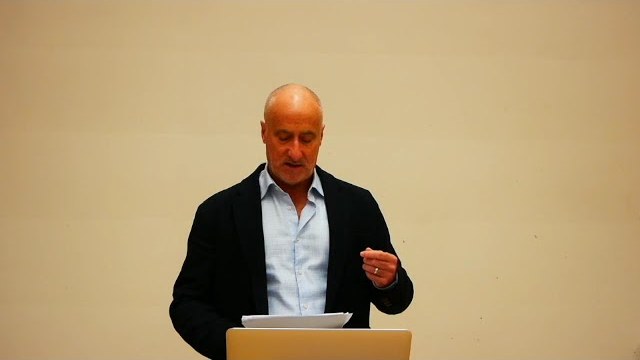
David J. Blacker delivering a lecture at McGill University Watch on YouTube ↗CSLP Speaker Series · McGill University
Invited keynotes

A highly sought-after speaker

Invited keynote lectures at institutions worldwide, including:

  • McGill University
  • University of Ottawa
  • University of Cambridge (UK)
  • University of Edinburgh
  • University of Wales
  • University of London
  • University of Illinois
  • National Defense University, Washington, DC
  • Arizona State University
  • Westminster University (UK)
  • Columbia University
  • Haus der Kulturen der Welt, Berlin
  • Museo d’Arte Contemporanea Roma
  • Kazi Nazrul University, West Bengal
  • Philosophy of Education Societies (GB & US)
  • British & American Educational Studies Assns.
About

Biography

David J. Blacker
6books
100+sole-authored publications & presentations
30+years teaching
Dozenspodcast interviews

David J. Blacker is Professor of Philosophy of Education and Legal Studies at the University of Delaware (USA). Trained in philosophy, he holds an M.A. in Philosophy and a Ph.D. in Philosophy of Education from the University of Illinois at Urbana-Champaign. He has also held positions at Illinois State University and Teachers College, Columbia University.

He has published six books including, most recently, Deeper Learning with Psychedelics: Philosophical Pathways Through Altered States (SUNY, 2024), The Falling Rate of Learning and the Neoliberal Endgame (Zero, 2013), What’s Left of the World: Education, Identity, and the Post-Work Political Imagination (Zero, 2019) and Democratic Education Stretched Thin: How Complexity Challenges a Liberal Ideal (SUNY, 2007). Blacker is also General Editor of the SUNY book series Horizons in the Philosophy of Education.

He has written well over one hundred sole-authored academic publications and presentations, including contributions to edited volumes with Oxford University Press, University of California Press, Blackwell, Springer and others.

Deeper Learning with Psychedelics is a Finalist for Foreword INDIES Book of the Year (an annual award for university and independent scholarly press books). The Falling Rate of Learning was the subject of a special issue of Educational Theory, the leading US philosophy of education journal.

He has been quoted in the New York Times and The Guardian (UK) and has been the main guest on dozens of podcasts, including multiple “best interview of the year” awards. Blacker has received both Outstanding Teacher and Distinguished Faculty awards from his students and colleagues.

Ph.D., Philosophy of Education, and M.A., Philosophy, University of Illinois at Urbana-Champaign · B.A. with Honors (Plan II), University of Texas at Austin.

Interviews

Selected interviews & media

Essay in PSYCHE

Psychedelics can be philosophical tools for demolishing assumptions · 2025

Winner, “Best of Interviews 2014”

The Majority Report with Sam Seder

Interview on The Falling Rate of Learning and the Neoliberal Endgame, conducted by Sam Seder · Released January 14, 2014

Winner, “Best of Interviews, 2014”

Full Stop: Reviews, Interviews, Marginalia

“Interview with David Blacker,” conducted by Michael Schapira & Timothy Ignaffo · Released October 8, 2014

On Psychedelics and Learning

Thinking in the Midst with Cara Furman · July 2026 · Apple Podcasts, Spotify

How Can We Learn from Psychedelics?

Lecture at McGill University · YouTube

The Eliminative Turn in Education

Interview on The Falling Rate of Learning · Symptomatic Commentary, 2014

More interviews & talks (14)
  • “Deeper Learning with Psychedelics” (interview)Sublation Media · November 2024
  • “Chilling at the Four Seasons Parking Lot: A Post Election Chat with David Blacker”Acid Left Podcast, with Mike Watson · November 17, 2020
  • “Education, Identity and Taxi”Zero Squared (Episode #130), with Douglas Lain · November 2, 2017
  • “Capitalism vs. Education: Why our free market obsession is wrecking the future”Salon.com, with Eric Levitz · June 8, 2014
  • “Interview”Five Years: Fragments, with Esther Planas · Arts Council England, Manchester School of Art, 2014
  • “Regarding Revolutions” (audio interview)The Extraenvironmentalist (#73B), with Seth Mozer-Katz & Justin Ritchie · February 11, 2014
  • “Dead Labor and Fatuous Accountability” (audio interview)The C-Realm, with KMO · January 29, 2014
  • “That Bill Murray Moment” (audio interview)The Diet Soap Podcast (#203), with Douglas Lain · January 23, 2014
  • “Fatalism and Falling” (audio interview)The Diet Soap Podcast (#202), with Douglas Lain · January 16, 2014
  • “We’re the House” (audio interview)The C-Realm, with KMO · January 15, 2014
  • “The Falling Rate of Learning” (audio interview)From Alpha to Omega (#043), with Tom O’Brien · December 17, 2013
  • Book and author talk at Red Emma’s Bookstore, BaltimoreBaltimore Alternative Media Network Group · December 2013
  • “The Falling Rate of Learning” and “Learning Through Debt,” Parts 1 & 2 (audio interviews)The Diet Soap Podcast (#172, #136, #137), with Douglas Lain · 2012–2013
  • “When Will the $1 Trillion Student Debt Bubble Burst?” and “David Blacker on the Ethics of Student Debt”Economy Watch (UK), with David Smith; interview with Christopher Martin · 2012
CV & Contact

Get in touch

For speaking invitations, interviews, and academic correspondence. The full curriculum vitae is available below.

School of Education · University of Delaware · Newark, DE 19716